A cyber-attack can be devastating. The actions you take during the first 48 hours can be critical to a successful outcome. These are complex security incidents requiring specialised skills, tools, and knowledge. The most common scenarios you could face range from an uncertain response to handling security incidents and related outages to unseen threat actors bypassing traditional defenses and detections. Rigid incident response programmes unable to counter dynamic threats and lack of business continuity and/or resiliency strategies, documentation, and response plans are also concerns. Whether you need help in preparation and planning, retaining direct assistance or simply need to raise your response readiness profile, Proton offers full-service cyber defense and cyber resilience teams with expertise to match your technology, industry and situation.
Develop strategic resilience response plans to guide an entire organisation in the event of a cybersecurity incident. Our incident response plans are brief, clear, resilient, and adaptable.
No matter how much you invest in security, incidents happen. We help minimise the impact on your business with our rapid engagement sevice to provide first response to the breaches.
Clarify potential threats, examine your network for compromise indicators, and guide response - if malicious activity is detected.

The Cyber Resilience Framework provides a strategic approach to strengthening an organization's ability to anticipate, withstand, respond to, and recover from cyber threats.
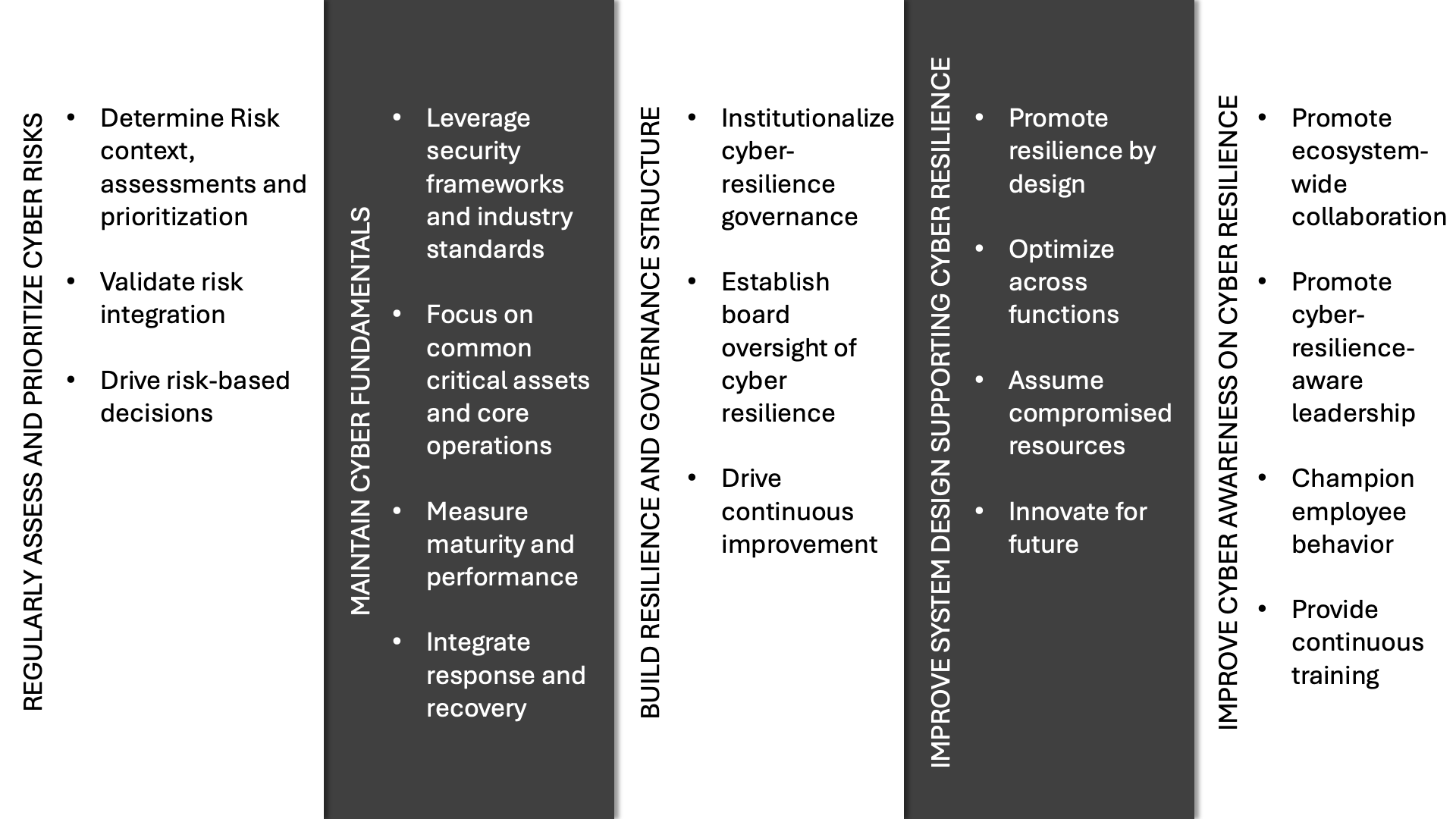
Risk-Driven Security: Cybersecurity efforts should be guided by regular risk assessments tied to business impact.
Core Security Foundations: Organizations must maintain visibility into their critical assets, align with industry standards, reduce exposure, and continually measure and improve security performance.
Governance Integration: Cyber resilience must be embedded into business strategy, with executive oversight, board accountability, and a clearly empowered CISO to drive execution.
Ecosystem Collaboration: Strengthening resilience includes active collaboration with partners, transparency in security practices, and raising standards across the supply chain.
Resilient by Design: Systems and processes should be built with resilience and adaptability in mind, assuming compromise is inevitable and planning for continuity under stress.
Culture of Resilience: Leadership must drive a resilience-first mindset across the organization through accountability, empowerment, ongoing training, and behavior reinforcement.